
Widespread Travel Chaos Hits Australia
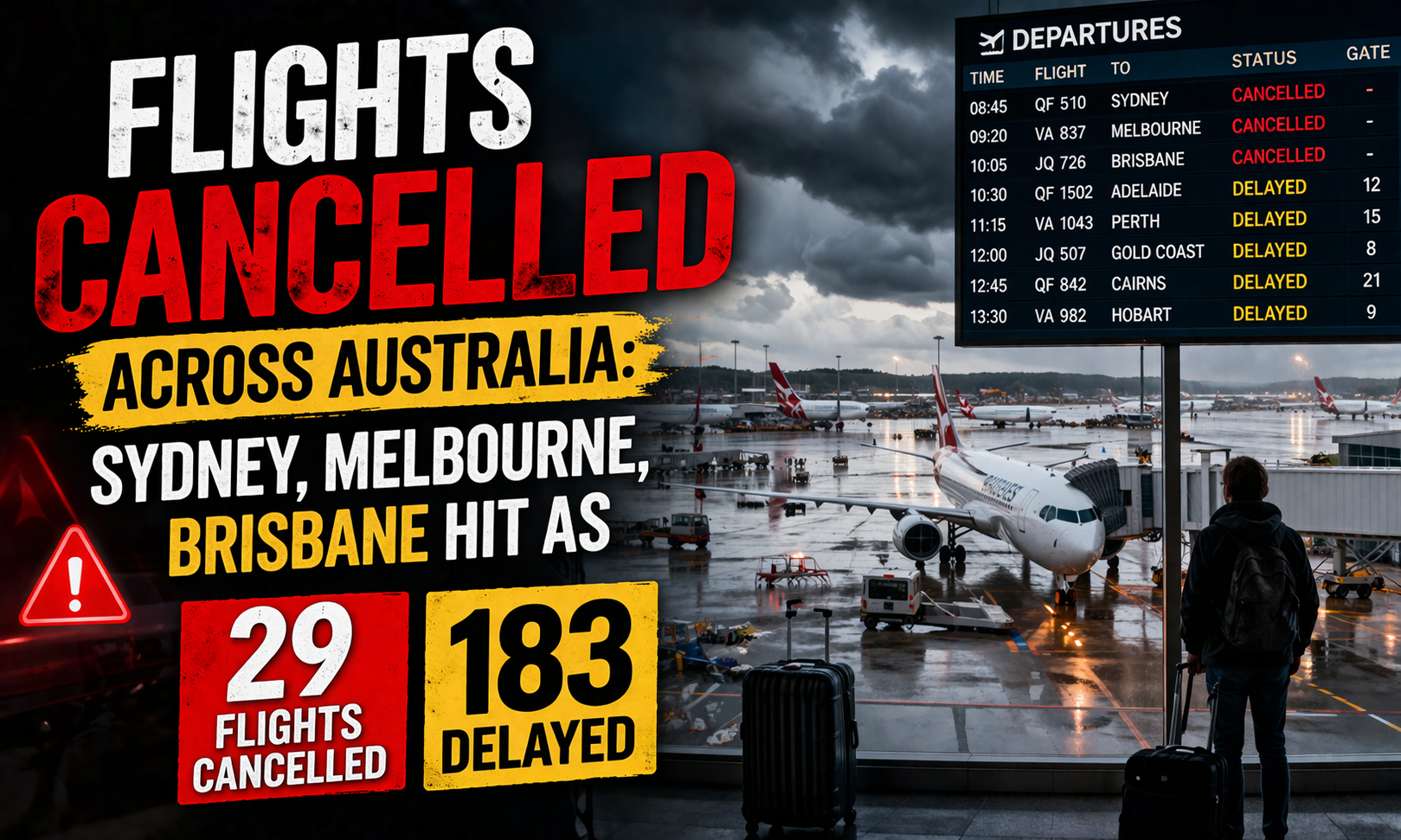
Air travel across Australia has been thrown into disarray after multiple flights were cancelled and hundreds more delayed, affecting major airports including Sydney, Melbourne, and Brisbane.
According to reports, at least 29 flights were cancelled and 183 delayed, causing significant disruption for passengers traveling both domestically and internationally.
Major airlines such as Qantas, Cathay Pacific, Air New Zealand, and Etihad Airways have all been impacted, leaving thousands of travelers stranded or facing long wait times.
What Caused the Flight Disruptions?
Weather Conditions
Adverse weather is one of the primary reasons behind the disruptions. Strong winds, storms, or poor visibility can force airlines to cancel or delay flights to ensure passenger safety.
Operational Challenges
Air traffic congestion, staffing shortages, and technical issues can also contribute to delays and cancellations across busy airports.
Ripple Effect Across Networks
When flights are delayed or cancelled in one location, it often creates a domino effect across airline networks, impacting flights in other cities and even international routes.
Airports Most Affected
Sydney Airport
Sydney Airport experienced significant disruption, with numerous delays and cancellations affecting both arrivals and departures.
Melbourne Airport
Melbourne Airport also reported widespread delays, particularly on domestic routes.
Brisbane Airport
Brisbane Airport faced operational challenges that contributed to flight disruptions.
Other Impacted Locations
Additional disruptions were reported in:
- Canberra
- Christchurch
- Kuala Lumpur
- Los Angeles
Airlines Affected by the Disruptions
Qantas
Qantas, Australia’s flagship carrier, saw several of its flights delayed or cancelled, affecting both domestic and international passengers.
Cathay Pacific
Cathay Pacific faced delays on long-haul routes, particularly those connecting Asia and Australia.
Air New Zealand
Air New Zealand experienced disruptions on trans-Tasman routes.
Etihad Airways
Etihad Airways also reported delays affecting passengers traveling between Australia and the Middle East.
Impact on Passengers
Delayed Travel Plans
Passengers faced long waiting times, missed connections, and uncertainty regarding their travel schedules.
Stranded Travelers
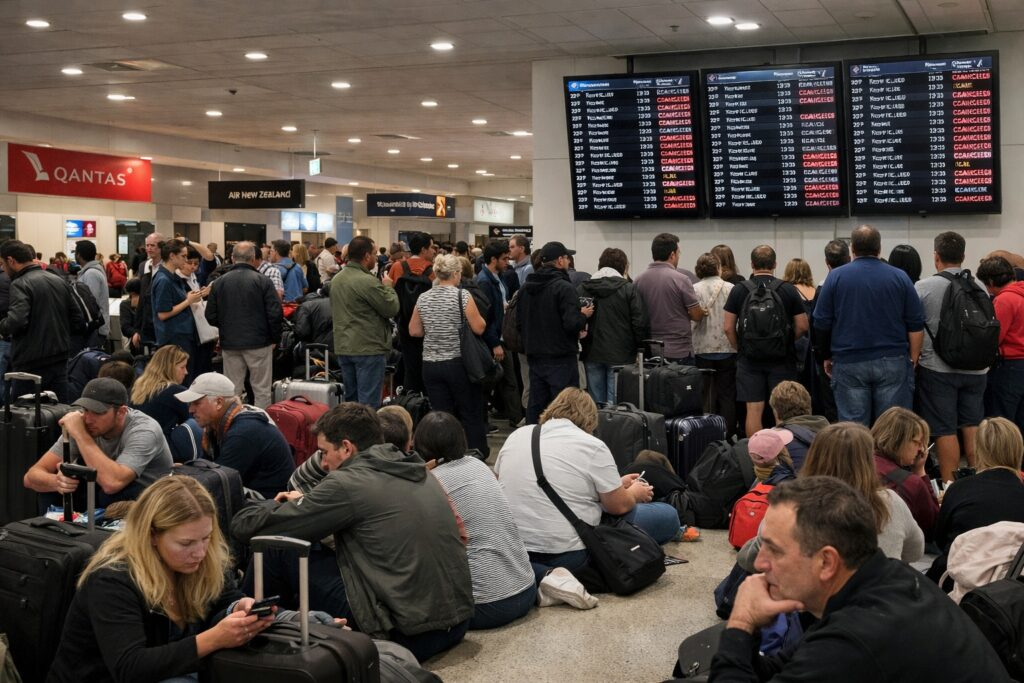
Many travelers were left stranded at airports, waiting for updates or alternative flights.
Increased Stress and Frustration
The disruptions caused frustration among passengers, particularly those with tight schedules or connecting flights.
International Travel Disruptions
Long-Haul Flights Affected
Flights to and from major international destinations such as Los Angeles and Kuala Lumpur were impacted.
Missed Connections
Passengers traveling internationally faced additional challenges due to missed connections and rescheduling difficulties.
How Airlines Are Responding
Rebooking Passengers
Airlines are working to rebook affected passengers on the next available flights.
Providing Assistance
Some airlines are offering:
- Meal vouchers
- Accommodation for overnight delays
- Customer support services
Managing Operational Challenges
Airlines are adjusting schedules and deploying additional resources to minimize further disruptions.
What Passengers Should Do
Check Flight Status
Passengers should regularly check updates from their airline or airport.
Arrive Early
Allow extra time at the airport to account for potential delays.
Stay Informed
Monitor official announcements and updates from airlines and authorities.
Your Rights as a Passenger
Compensation Policies
Depending on the airline and circumstances, passengers may be entitled to compensation or assistance.
Travel Insurance
Travel insurance can help cover costs related to delays and cancellations.
Broader Impact on the Aviation Industry
Operational Strain
Disruptions place additional pressure on airlines and airport staff.
Financial Implications
Cancellations and delays can lead to significant financial losses for airlines.
Lessons for Travelers
Plan Ahead
Booking flexible tickets and allowing extra time for connections can help mitigate disruptions.
Stay Prepared
Having essential items and travel documents readily accessible can ease the impact of delays.
Expert Insights
Importance of Resilience
Aviation experts emphasize the need for resilient systems to handle disruptions.
Role of Technology
Advanced systems can help improve scheduling and reduce delays.
Looking Ahead
Recovery Efforts
Airlines and airports are working to restore normal operations as quickly as possible.
Preventing Future Disruptions
Efforts are being made to improve infrastructure and operational efficiency.
Conclusion: Navigating Travel Disruptions
The widespread flight cancellations and delays across Australia highlight the challenges faced by the aviation industry. With major airports like Sydney, Melbourne, and Brisbane affected, and airlines such as Qantas and Cathay Pacific experiencing disruptions, the impact has been widespread.
For passengers, staying informed and prepared is key to navigating such situations. While disruptions are sometimes unavoidable, understanding how to respond can make a significant difference in managing travel challenges.
As the aviation sector continues to recover, both airlines and travelers will need to adapt to ensure smoother journeys in the future.
FAQs
Why were flights cancelled across Australia?
Flights were cancelled and delayed due to a combination of factors, including adverse weather conditions, operational challenges, and air traffic congestion at major airports.
Which airports were most affected?
Major disruptions were reported at key airports such as Sydney Airport, Melbourne Airport, and Brisbane Airport.
How many flights were impacted?
At least 29 flights were cancelled and 183 flights delayed, affecting both domestic and international travel.
Which airlines were affected by the disruptions?
Airlines impacted include Qantas, Cathay Pacific, Air New Zealand, and Etihad Airways, among others.