
Understanding Daylight Saving Time in Australia
Daylight Saving Time (DST) in Australia is a seasonal time adjustment designed to make better use of daylight during the warmer months. By moving clocks forward in spring and back in autumn, people can enjoy longer evenings and improved energy efficiency.
However, because Australia spans multiple states and territories—with some observing DST and others not—the system can sometimes be confusing. This pocket guide will help you understand exactly when Daylight Saving Time ends in Australia, how it works, and what it means for you.
When Does Daylight Saving Time End in Australia?
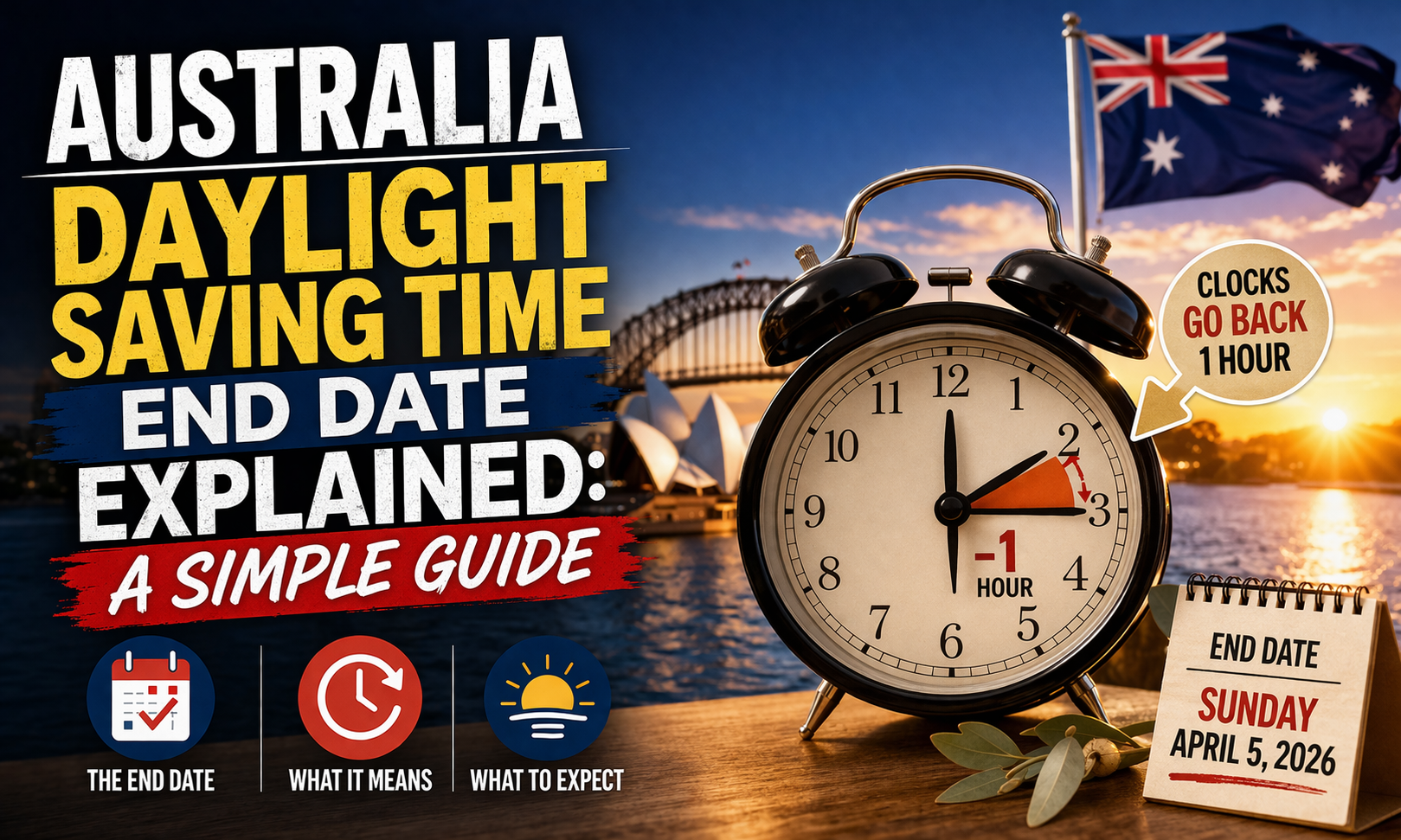
In Australia, Daylight Saving Time ends on the first Sunday of April each year.
At 3:00 AM local daylight time, clocks are turned back one hour to 2:00 AM standard time. This means you gain an extra hour of sleep on the night DST ends.
Example for 2026
- DST ends on Sunday, April 5, 2026
- Clocks go back from 3:00 AM to 2:00 AM
Which Australian States Observe Daylight Saving Time?
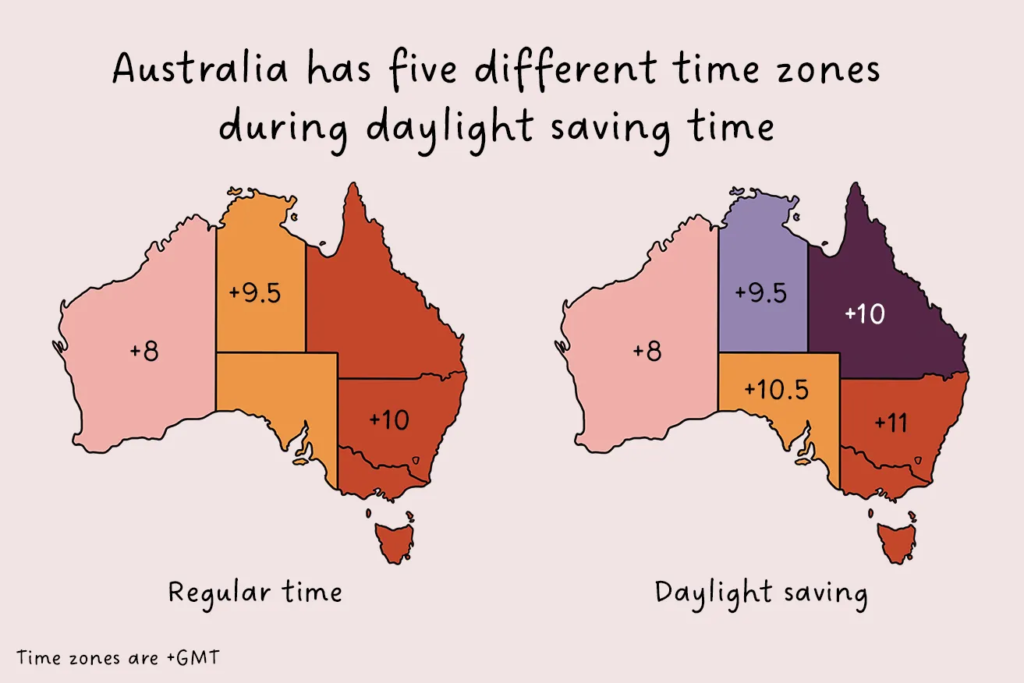
Not all parts of Australia follow DST. Here’s a breakdown:
States and Territories That Observe DST
- New South Wales
- Victoria
- South Australia
- Tasmania
- Australian Capital Territory
States and Territories That Do NOT Observe DST
- Queensland
- Western Australia
- Northern Territory
This difference can create time zone variations across the country, especially during the transition periods.
Why Does Daylight Saving Time End?
Daylight Saving Time ends as Australia moves from the longer days of summer into the shorter days of autumn and winter.
Key Reasons
- Less daylight in the evenings makes DST unnecessary
- Aligns waking hours more closely with natural daylight
- Reduces disruption during darker mornings
What Happens When the Clocks Go Back?
When DST ends, clocks are set back by one hour. This shift has several immediate effects:
More Morning Light
Sunrise occurs earlier, providing more daylight in the morning.
Shorter Evenings
Sunsets happen earlier, reducing daylight hours in the evening.
Extra Hour of Sleep
Most people enjoy an extra hour of rest as the clock is turned back.
How Does DST Affect Daily Life?

Work and School Schedules
The time change can temporarily disrupt routines, but most people adjust quickly.
Travel and Transport
Flight schedules, public transport, and international travel plans may be affected. Always double-check times during DST transitions.
Technology Updates
Most modern devices—such as smartphones and computers—automatically adjust to the time change.
Tips to Adjust to the Time Change
While gaining an hour sounds great, the shift can still affect your body clock.
Gradually Adjust Your Sleep Schedule
Go to bed slightly earlier in the days leading up to the change.
Get Morning Sunlight
Exposure to natural light helps reset your internal clock.
Avoid Heavy Meals Before Bed
This can improve sleep quality during the transition.
Daylight Saving Time vs Standard Time
Understanding the difference between DST and standard time can help avoid confusion.
Daylight Saving Time
- Clocks are set one hour ahead
- Longer evenings
- Used during spring and summer
Standard Time
- Clocks return to normal
- Earlier sunsets
- Used during autumn and winter
Common Confusions About DST in Australia
“Why doesn’t the whole country follow DST?”
Australia’s size and varying climates mean that DST is not practical for all regions, particularly in northern areas where daylight variation is minimal.
“Do all states change at the same time?”
Yes, states that observe DST change simultaneously, but non-DST states remain unchanged, creating time differences.
Impact on Businesses and Economy
Retail and Hospitality
Longer daylight hours during DST often boost evening activity, which declines slightly when DST ends.
Energy Consumption
While DST aims to save energy, the actual impact varies depending on usage patterns.
Communication Across States
Businesses operating nationally must account for time differences when scheduling meetings and operations.
DST and International Time Zones
Australia’s DST changes can affect communication with other countries.
Example
- When DST ends, the time difference between Australia and countries like the US or UK may shift.
This is important for:
- Remote work
- International business
- Online meetings
Historical Background of DST in Australia

Daylight Saving Time was first introduced in Australia during World War I as a way to conserve energy. It was later reintroduced and adopted more widely, though not uniformly across all states.
Over time, debates about its effectiveness and practicality have led to ongoing discussions about whether DST should continue.
Pros and Cons of Daylight Saving Time
Advantages
- More daylight for evening activities
- Potential energy savings
- Boost to outdoor and retail activities
Disadvantages
- Disruption to sleep patterns
- Confusion across time zones
- Limited benefits in some regions
Future of Daylight Saving Time in Australia
The future of DST remains a topic of debate. Some argue for a unified system across the country, while others believe the current arrangement works best.
Technological advancements and changing work patterns—such as remote work—may also influence future decisions.
Quick Pocket Guide Summary
- DST ends: First Sunday of April
- Time change: Clocks go back 1 hour (3:00 AM → 2:00 AM)
- 2026 date: April 5
- States observing DST: NSW, VIC, SA, TAS, ACT
- States not observing DST: QLD, WA, NT
Final Thoughts
Daylight Saving Time in Australia plays an important role in how people experience daylight throughout the year. While the system can be confusing due to regional differences, understanding when it ends—and how it affects your daily life—can make the transition much smoother.
As the clocks go back and the seasons change, it’s a good opportunity to reset routines, enjoy the extra hour of sleep, and prepare for the cooler months ahead.
Whether you’re planning travel, managing work schedules, or simply curious about the time change, this pocket guide ensures you’ll always stay on track.
FAQs
When does Daylight Saving Time end in Australia?
Daylight Saving Time (DST) in Australia ends on the first Sunday of April each year. In 2026, it ends on April 5.
What time do the clocks change when DST ends?
Clocks are turned back one hour at 3:00 AM, moving back to 2:00 AM standard time.
Which Australian states observe Daylight Saving Time?
DST is observed in:
New South Wales
Victoria
South Australia
Tasmania
Australian Capital Territory
Do we gain or lose an hour when DST ends?
You gain one hour when DST ends, which means an extra hour of sleep.